APARTMENT HOMESTEADING ™ The Self-Sufficient Renter
Off-Grid Skills, Slow-Living Projects, and Real Preparedness for People Who Don't Own the Roof A complete guide to growing, fermenting, baking, composting, powering, and preparing your rental — no land, no permit, no permanent trace.
Most self-sufficiency books assume you own something
Acres. A roof. A basement. A yard with room for a well. If you rent — a flat, a room, a house you could be asked to leave in twelve months — that advice quietly excludes you, or tells you to "downscale" a plan that was never built for your life in the first place.
This one doesn't
Every project here was chosen against one test: does it work in a space you don't own, with nothing permanent, and does it produce something real — food, water security, a skill, a saving — rather than just the feeling of being prepared. Pack it up on moving day in an afternoon, and start again.
Who this is for :
1 .Renters and apartment dwellers
Anyone who wants real self-sufficiency skills without a mortgage, a permit, or a landlord's permission.
2 .Beginners, deliberately
Every project was chosen to be startable in under an hour, with troubleshooting built in for when it goes wrong.
3. People who move often
Every system is designed to break down and travel — Chapter 12 is a full moving-day checklist most books never write.
4 .Both the hobbyist and the worrier
Slow, satisfying projects like sourdough and fermentation sit alongside water, power, and a 72-hour bag — one book, not two.
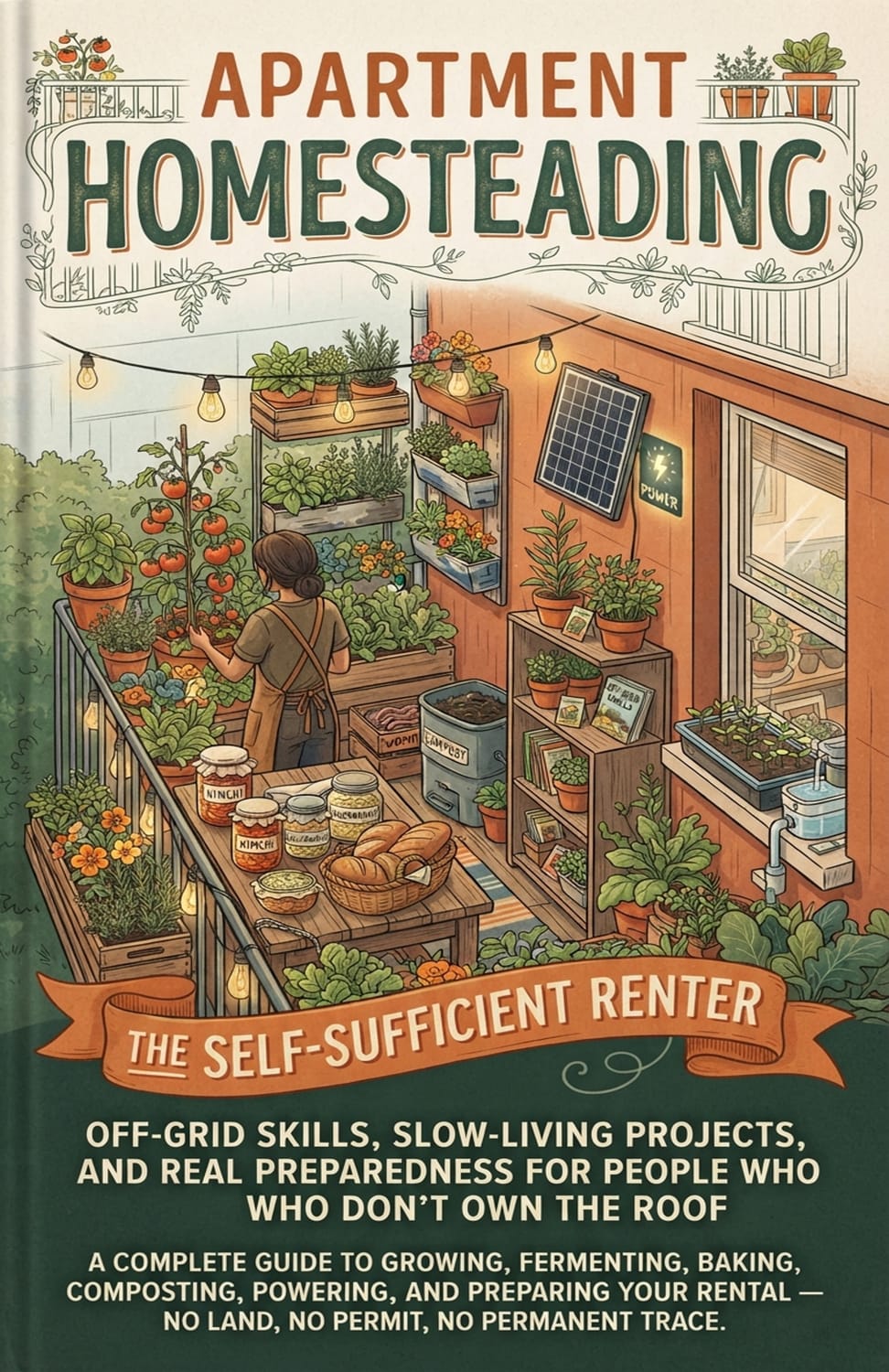
When you purchase this book, you can opt to immediately receive the e-book via download or get a hard copy shipped to you and can start learning:
Grow, Ferment, Bake, Reduce
The Container Food System
Fermentation on the Counter
Sourdough From a Rental Kitchen
Composting and Zero-Waste
Natural DIY Products
A Windowsill Herb Garden, the Traditional Way
Preparedness Foundations
Water Security Without a Well
Power That Fits in a Closet
The Deposit-Safe Heat and Cooling Playbook
The 72-Hour Bag and the 30-Day Pantry
Building the Practice
Skill-Building and the Self-Sufficient Mindset
Moving-Day Resilience
The Reference Section
Printable Trackers and Logs
The Seasonal Project Calendar
Resource Directory
Glossary of Terms
Frequently Asked Questions
Project and Recipe Index
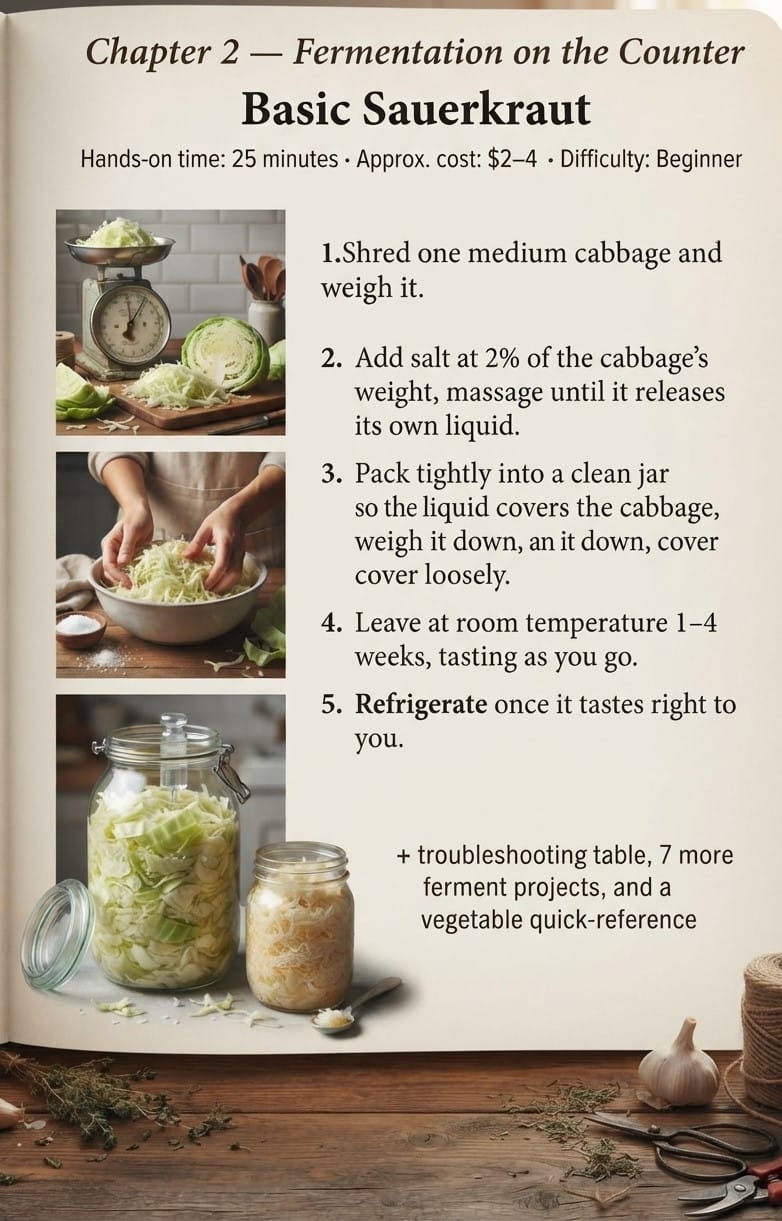
It reads like a recipe, not a lecture
Every project comes with real amounts, numbered steps, and what to do when it doesn't go to plan — not just the idea of it.
Chapter 2 — Fermentation on the Counter
Basic Sauerkraut
Hands-on time: 25 minutes | Difficulty: Beginner
Shred one medium cabbage and weigh it.
Add salt at 2% of the cabbage's weight, massage until it releases its own liquid.
Pack tightly into a clean jar so the liquid covers the cabbage, weigh it down, cover loosely.
Leave at room temperature 1–4 weeks, tasting as you go.
Refrigerate once it tastes right to you.
+ troubleshooting table, 7 more ferment projects, and a vegetable quick-reference


Over 90,000 people have rated this guide with an average score of 4.96.


Benefits you receive after the purchase?

1. Instant download · Yours to keep
A downloadable eBOOK— 200 pages
Instant delivery by email and a Digistore24 download page right after checkout
Yours to keep, on any device, no subscription
2. Lower grocery and household bills:Herbs you stop buying in plastic clamshells, ferments that cost a fraction of the jar price, cleaning spray and soap you make instead of purchase — small savings that add up every single week, not just once.
3.Something real to show for your time: A loaf of sourdough, a jar of kimchi, a windowsill you actually harvest from — not just a cleared to-do list. Every chapter ends in a finished thing, not an abstract idea.
4. Real confidence if something goes wrong: Water, power, and a 72-hour bag ready before you need them — not scrambled together during an outage, with a plan you've already rehearsed instead of one you're improvising.
Questions before you start
Every project in the book is non-invasive and leaves no permanent trace. Nothing requires drilling, permanent fixtures, or structural changes — everything moves with you when you move out.
The lowest-cost entry points — a few herb pots, a sourdough starter, a countertop compost bin — can each be started for a low price. Every chapter includes its own budget tiers so you can plan ahead.
Once established, most of these systems take minutes, not hours: watering herbs, feeding a starter, checking a worm bin, and rotating water are all under fifteen minutes combined on a normal week.
No. Every project was chosen specifically because it's beginner-accessible, with troubleshooting tables throughout so early mistakes are easy to fix rather than discouraging.
© 2026 APARTMENT HOMESTEADING ™ The Self-Sufficient Renter
Contact: APARTMENT HOMESTEADING ™ (Pty) Ltd 13242 Imperial Hwy Santa Fe Springs, CA 90670
support@apartmenthomesteading.com
hello@apartmenthomesteading.com
Disclaimer: This guide is for educational purposes only. Results may vary depending on individual effort, application, and experience.
Contact Us | Legal Information | Became an Affiliate | Return Policy